Makie and Urushi-e (Lacquer Painting)
Makie is a traditional Japanese decorative technique in which designs are drawn with lacquer, and then metal powders such as gold or silver are sprinkled onto the surface to create embellishments. This unique method has a long history, dating back to the Heian period (794–1185). In Yamanaka lacquerware, the development of advanced wood-turning and lacquering techniques has added further value to the products. As a result, the art of makie has also evolved significantly, giving rise to intricate and elegant decorative expressions.
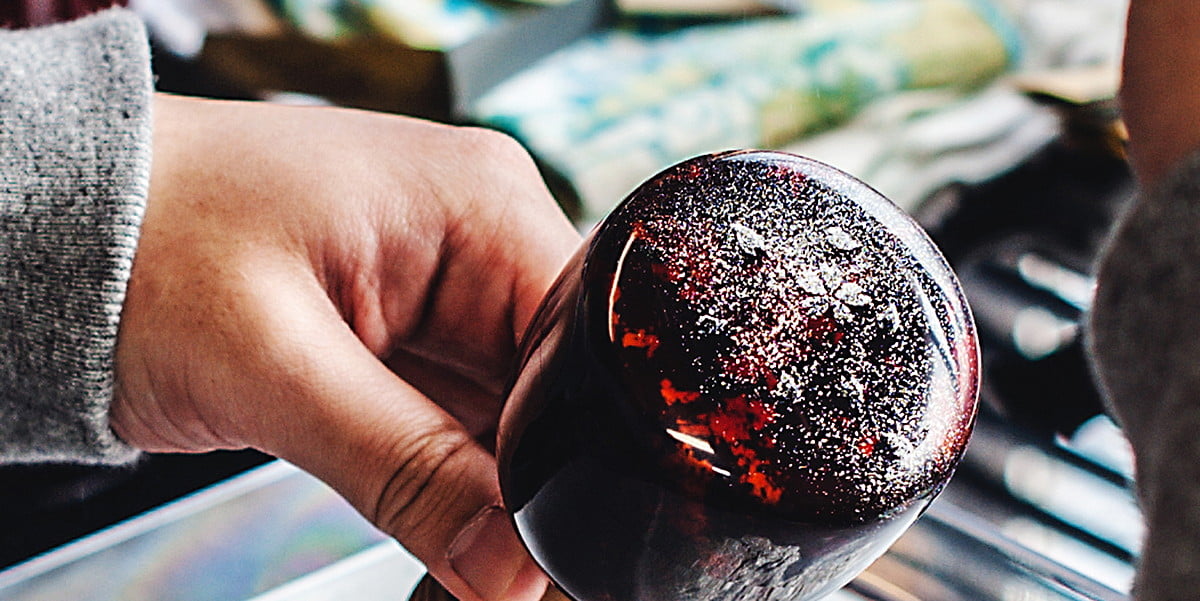
Urushi-e, or lacquer painting, is a technique in which designs or images are painted directly onto the surface of an object using colored lacquer—lacquer mixed with pigments. By adding pigments to standard lacquer (such as black or transparent lacquer), it becomes possible to express a variety of colors such as red, yellow, green, blue, and white, enabling more pictorial and expressive decoration. The brushwork used in urushi-e is highly flexible, allowing for detailed lines, solid fills, shading, and other painterly techniques.
In Yamanaka, such decorative techniques began to be applied around the mid-Edo period. They have been widely used on everyday items such as bowls and trays, as well as on tea utensils like natsume (tea caddies) and religious implements.
← Return to floor map